IRIS IN PERFUMERY: WHY A RAW MATERIAL SHOULD NOT BECOME A TREND
Published on 23 September 2024. Updated on 2 October 2026.
We originally called this article “Iris: the trendy ingredient in perfumery”.
Two years later, we would change almost every word of that title.
A raw material does not become more interesting because it is in fashion.
And iris deserves better than that.
Because before it is a trend, it is a strange material. Slow. Rare. Difficult to produce. Very expensive. And above all far less obvious than it seems.
We picture a flower.
The perfumer mostly works with its rhizome.
We picture a naturally powdery smell.
Iris can be earthy, woody, vegetal, fatty, metallic, almost cold.
Finally, we imagine that the more natural iris a perfume contains, the more beautiful it will be.
Here too, that would be jumping to conclusions.
IN SHORT
In perfumery, the emblematic natural iris material comes mainly from the rhizome, the thick underground stem that grows beneath the plant.
Its characteristic scent does not appear straight away. As the rhizome matures, irones gradually develop, molecules that play a major part in its very particular olfactory signature.
After processing and distillation, the result is notably the famous orris butter, also known as iris butter.
Its extremely low yield and the time needed to produce it explain why it ranks among the most costly natural raw materials in perfumery.
But a perfume that smells of iris does not necessarily contain natural orris butter. The perfumer also has irones, ionones, methyl ionones and other materials with which to build an iris accord.
And that is not necessarily less interesting.
As so often in perfumery, the real question is not only: which material was used?
But: what did the perfumer do with it?
DOES IRIS IN PERFUMERY REALLY COME FROM THE FLOWER?
When we talk about iris in perfumery, the image is misleading.
We instinctively picture the large violet, blue, white or yellow flowers.
Yet the natural material traditionally used by perfumers comes mainly from the rhizome.
This distinction matters.
You sometimes read that “the iris flower smells of nothing”.
That is yet another simplification.
Some iris flowers are fragrant. They are simply not the source of the classic natural material used in perfumery.
The real treasure lies underground.
In species such as Iris pallida or Iris germanica, the rhizome is harvested, cleaned, dried and then processed.
And above all, you have to wait.
WHY DO YOU HAVE TO WAIT BEFORE IRIS SMELLS OF IRIS?
A freshly harvested rhizome does not yet fully express what we recognise as the scent of iris in perfumery.
As it matures, its composition changes and irones gradually develop.
They play a major part in the violet, powdery, woody and sometimes almost creamy facets associated with orris.
Scientific research shows that their content changes with the age of the rhizome. Producers then use different processes depending on the species, the qualities they are looking for and the type of extract.
So there is no universal timetable that could be summed up as “it takes exactly six years to make iris”.
What is true, however, is that this material takes time.
And in an industry obsessed with novelty, time is already something singular.
WHAT IS ORRIS BUTTER?
The name can be confusing.
Orris butter is obviously not butter in the culinary sense.
It is an aromatic material obtained from iris rhizomes, notably by distillation. At room temperature, its high proportion of certain fatty acids can give it a solid or semi-solid texture, hence the name orris butter.
Its profile is not just powdery.
Givaudan, for example, describes its orris butter as earthy, powdery, woody, soft, unctuous, slightly sour, green and aromatic all at once.
This may be one of the first misunderstandings to let go of:
iris does not automatically mean rice powder.
Source: Givaudan, Orris Pallida Butter 8% irones France.
WHY IS IRIS SOMETIMES CALLED “THE BLUE GOLD OF PERFUMERY”?
The expression is spectacular.
But for once, it does not come out of nowhere.
Orris butter ranks among the most costly natural materials in the perfumer’s palette.
The time spent growing and maturing it obviously plays a role.
But the yield is even more telling.
At IFF-LMR, around 2,000 kg of plant material are needed to produce 1 kg of Orris Absolute Italy.
Two tonnes for one kilo.
It becomes easier to understand why this material is sometimes nicknamed “blue gold”.
But here again, price can become an intellectual trap.
A very expensive material is not automatically a great material within a formula.
And a formula containing a lot of natural iris is not automatically a great perfume.
The value of a material never replaces the composition.
Yield source: IFF-LMR, Orris Absolute Italy.
Source for the expression “blue gold of perfumery”: Armani/Privé Iris Bleu, which explicitly uses the expression for iris oil.
IS IRIS REALLY THE MOST EXPENSIVE MATERIAL IN PERFUMERY?
You often read that it is.
We prefer to be more precise.
Natural orris butter belongs to the very small group of the most costly natural raw materials used in perfumery.
But it is hard to establish an absolute ranking.
The price depends on origin, quality, irone content, extraction process, yield, availability and the market.
Other exceptional materials, such as certain qualities of natural oud or other very rare products, can reach extremely high price levels.
So the correct statement is not:
“iris is the most expensive material in the world”.
But rather:
“natural orris butter ranks among the most precious and most costly materials in perfumery”.
DOES AN “IRIS” PERFUME NECESSARILY CONTAIN NATURAL IRIS?
No.
And that is no scandal.
As with leather, musk or oud, the perfumer can build an impression of iris from several materials.
Ionones and methyl ionones, for example, can create violet, woody, powdery or floral facets that may contribute to an iris accord.
The natural material may be present.
It may be used in tiny amounts.
It may also be absent.
What matters, once again, is what the perfumer is trying to write.
Setting “natural = real” against “accord = fake” is a very poor way of looking at perfumery.
An accord can bring one facet into the light, remove another, or make a material colder, drier, more vertical or more abstract.
In other words:
synthesis does not necessarily replace nature. It can also offer another way of thinking about it.
WHY IS IRIS SO CLOSELY ASSOCIATED WITH POWDER?
Because certain facets of orris, of ionones and of many historic accords naturally evoke violet, cosmetic powders, lipstick or rice powder.
The association has become so strong that people sometimes end up confusing the word “powdery” with the word “iris”.
Yet iris can tell many other stories.
Earth.
Wood.
Root.
Cold.
Green.
Leather.
Sometimes even something almost metallic.
And that is exactly where things start to get interesting.
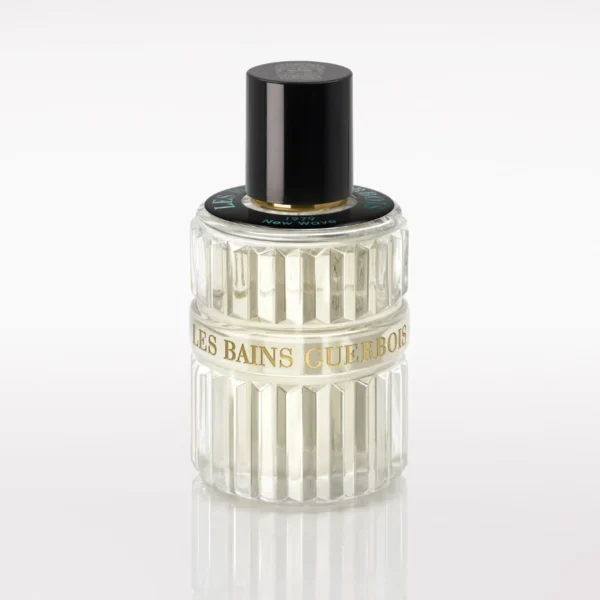
1979 NEW WAVE: AN IRIS AGAINST THE CURRENT
With 1979 New Wave, Dominique Ropion offers a resolutely contemporary reading of iris, far from its most classic powdery codes.
When we worked with him, we were not looking for a comfortable or nostalgic iris.
We wanted something electric.
Almost icy.
Slightly leathery.
Dry.
Edgy.
A black silhouette, very fitted, almost rock.
More biker jacket than rice powder.
Dominique Ropion set iris against two mints, cedar and sandalwood.
The freshness here is not trying to be light or summery.
It stimulates.
It pulls the perfume taut.
Independent criticism has picked up on this contrast too. Matvey Yudov, chemist and fragrance evaluator at Fragrantica, describes 1979 New Wave as built around a dark and distant iris, non-cosmetic, cold, green and herbal, set against a mineral accord of mint, salicylate and cedar.
And yes, we think it is brilliant in winter.
Precisely because it does not try to warm up the season.
At a time when gourmand, vanilla, enveloping and comforting perfumes hold an important place in fragrance trends, 1979 New Wave chooses cold, tension, green and mineral.
There is something almost countercultural about that choice:
wearing cold when everything invites comfort.
1979 New Wave does not warm winter up.
It makes it electric.
Source on the current gourmand trend: Vogue, “The Best Gourmand Perfumes Redefining Sweetness”, 2026.
A MATERIAL BECOMES INTERESTING WHEN IT STOPS PLAYING ITS CLICHÉ
This may be what iris teaches us best.
A raw material has a history.
Codes.
Associations.
Clichés too.
The perfumer’s role is not necessarily to respect them.
They can twist them.
Cool them down.
Dry them out.
Make them darker.
More transparent.
More abstract.
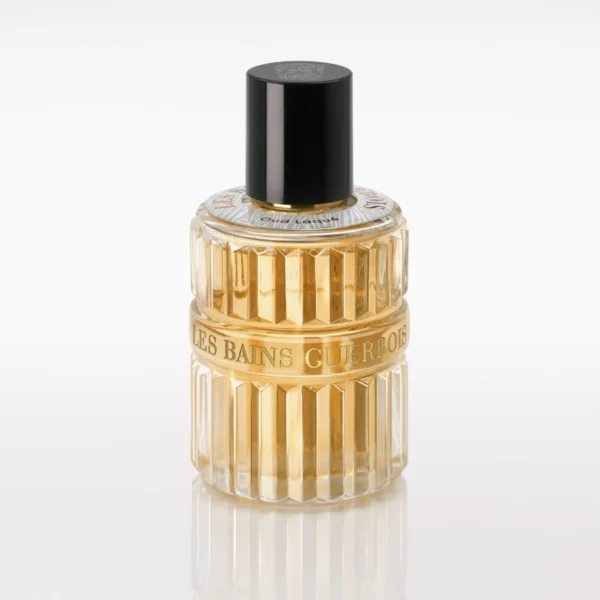
With oud, Mathieu Nardin showed us that perhaps it was not the material we disliked so much as certain ways of handling it.
With iris, Dominique Ropion reminds us of something very similar.
A material becomes truly interesting when a perfumer stops asking it to play its own cliché.
SO, IS IRIS STILL “TRENDY”?
Perhaps.
But it is probably the least interesting question you could ask about it.
Iris was here long before trends.
It will still be here after them.
The real question lies elsewhere:
what can a perfumer still do with it?
That is the one that interests us.