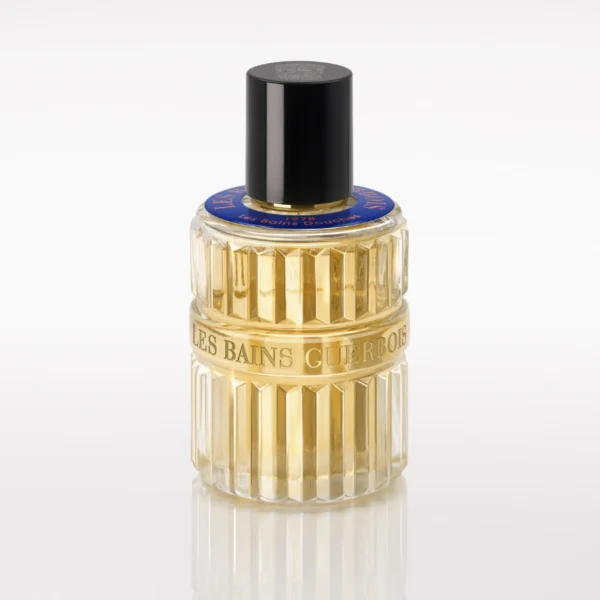
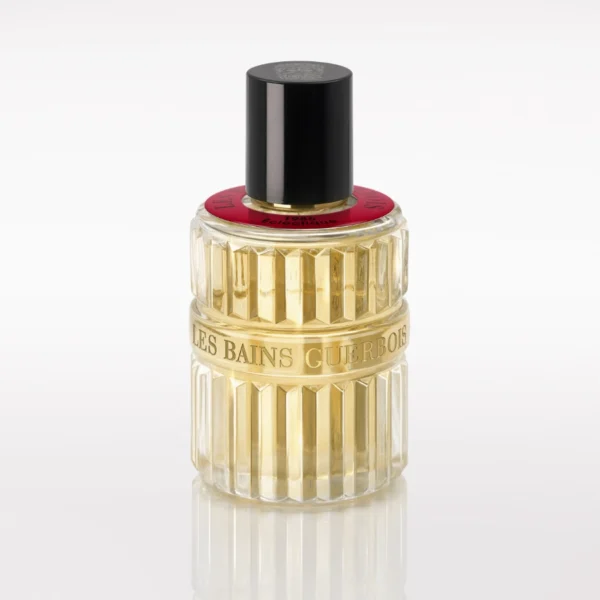
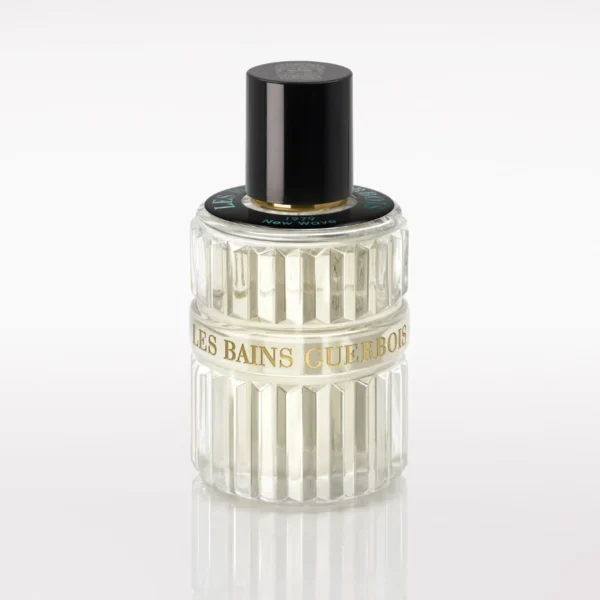
1978 LES BAINS DOUCHES: HOW DO YOU TURN A NIGHT INTO A PERFUME?
Published on 20 September 2024. Updated on 6 October 2026.
We originally called the first version of this article “The scent of glory”.
We would not call it that today.
First, because the story of Les Bains Douches does not need anyone to explain that it was glorious.
Second, because the interesting question lies elsewhere.
How do you turn a night into a perfume?
Not a photograph.
Not a list of celebrities.
Not a nostalgic reconstruction of 1978.
A sensation that someone might still want to wear today to go out, dance, have a drink, come home too late.
That was the whole challenge of 1978 Les Bains Douches.
IN SHORT
1978 Les Bains Douches is an eau de parfum created by Bertrand Duchaufour around the memory of the Parisian club that opened in 1978.
The choice of perfumer was not only about his olfactory signature, often associated with woods, resins, spices and incense. Bertrand also knew Les Bains Douches from the inside: he had been a regular himself.
The composition brings together yuzu, a whisky accord, davana, blond tobacco, Atlas cedar, myrrh and vanilla, among others.
But the point was not to pile up the signs of a night at the club.
We had to find the balance.
And above all, create a perfume that would not only smell of a night gone by.
It still had to make you want to go out today.
DID LES BAINS DOUCHES HAVE A SMELL?
Of course.
But certainly not just one.
Whisky, blond tobacco, wood, resins, heat, skin, smoke, night air.
We could have tried to put everything into a bottle.
It would probably have produced a caricature.
Because the perfume of a place is not an inventory of smells.
The perfumer has to choose.
What to keep.
What to push.
What to forget.
And what to invent in order to recapture not the exact smell of a place, but the feeling it created.
So 1978 Les Bains Douches is not an olfactory archive.
It is an interpretation.
WHY BERTRAND DUCHAUFOUR?
We did not need a perfumer who could imagine what Les Bains Douches had been like.
We wanted someone who knew the place from the inside.
Bertrand Duchaufour had been a regular at the club.
We knew this when we entrusted him with 1978.
But that closeness to the place was obviously not enough.
We also needed a perfumer able to work with texture, depth and contrast without slipping into showiness.
Bertrand has long been associated with a style rich in woods, resins, spices and incense. He himself explained that his style had long revolved around these materials before opening up to much broader registers.
Sources: Nose Paris, Bertrand Duchaufour; Grain de Musc, interview with Bertrand Duchaufour (2010, in French).
That ability to build dense perfumes while keeping a clear structure was exactly what interested us for 1978.
Because the subject could easily become heavy.
The real challenge was to keep the night without smothering it.
IS LUXURY A MATTER OF ACCUMULATION?
Not for us.
1978 could easily have become enormous.
Whisky.
Davana.
Blond tobacco.
Cedar.
Myrrh.
Vanilla.
Everything was there to make a dark, thick, showy perfume.
And that was not what we wanted.
At Les Bains Guerbois, our idea of luxury owes a great deal to balance.
Not necessarily to discretion.
Nor to power.
To that moment when the materials can have an enormous amount of character without any one of them completely taking over.
A balance.
It took us a while to understand how essential the citrus notes were to that balance.
WHY ALMOST AN OVERDOSE OF CITRUS?
In the top notes, we needed light.
Yuzu and bitter orange were not there to make 1978 fresh or summery.
They had to convey something else: the club’s light show, the mirror ball, the flashes of light, the coloured alcoves.
A night at Les Bains Douches was never uniformly dark.
There was black, of course.
Wood.
Tobacco.
Alcohol.
Heat.
But there were also those flashes that cut across faces, bodies and the volumes of the place.
We almost needed an overdose of citrus to recapture that feeling.
Brilliance.
Transparency.
Elegance.
And above all, joy.
Because a night at Les Bains was not supposed to be only dark, smoky or decadent.
There was that particular excitement at the start of the evening, when everything still seems possible.
The citrus notes bring that light.
Then the night arrives.
It took us a long time to understand why this balance worked so well.
Looking back, this may be exactly where our definition of luxury lies: not piling up effects, but finding the right tension between light and depth.
HOW DOES THE PERFUME TIP INTO THE NIGHT?
Davana brings a liqueur-like, almost fruity facet.
The whisky accord immediately gives the perfume a temperature and an attitude.
Blond tobacco adds substance and sensuality.
Cedar gives structure.
Myrrh sets down its resinous depth.
Vanilla rounds everything off without turning the composition into a gourmand perfume.
The official structure of 1978 combines yuzu, a whisky accord and davana in the top notes, rose, heliotrope and blond tobacco in the heart, then Atlas cedar, myrrh and vanilla in the base.
Source: 1978 Les Bains Douches, Les Bains Guerbois.
But here again, what interests us is not the list.
It is the trajectory.
Light before depth.
DOES A WHISKY ACCORD CONTAIN WHISKY?
Not necessarily.
And that is exactly what makes the word “accord” interesting.
In perfumery, an accord means combining several materials to produce a recognisable olfactory impression.
A leather accord is not made by distilling a jacket.
A marine note does not require putting seawater in the bottle.
And a whisky accord can recreate certain sensations linked to alcohol, wood, fruit, warmth or fermentation without any whisky having to be poured into the formula.
So 1978 is a reminder of something essential:
perfumery is also an art of illusion.
SHOULD A CLUB PERFUME SMELL OF THE PAST?
Absolutely not.
That was probably the biggest risk with 1978.
Making a souvenir for those who had known Les Bains Douches and a historical object for everyone else.
That did not interest us.
A perfume can bear a date without being dated.
Someone who was not born in 1978 should be able to smell this perfume without instructions.
They should be able to wear it today.
To go out.
To dance.
For a night that has nothing to do with the nights of 1978.
Whisky, tobacco and myrrh tell a certain idea of the night.
The citrus notes, the transparency and the balance stop that night from becoming a period costume.
1978 is a perfume for the night. Not a souvenir of one.
DO YOU NEED TO HAVE KNOWN LES BAINS DOUCHES TO WEAR 1978?
No.
Thankfully.
The story enriches the perfume.
It must never be a condition for loving it.
On the contrary, we like the idea that someone could discover 1978 without having seen a single photograph of the club.
Wear it.
Go out in it.
And only afterwards discover what inspired it.
At that point, the perfume stops being a memory reserved for those who were there.
It becomes a new experience.
That is probably the only way for a story to stay alive.
IS A PERFUME OF MEMORY A RECONSTRUCTION?
No.
And that is precisely what interests us.
We never asked Bertrand to chemically reproduce the exact smell of a night at Les Bains Douches.
Nobody could.
Memory selects.
It amplifies some sensations and erases others.
Perfume works the same way.
It does not document a place like an archive.
It chooses what deserves to remain.
A perfume of memory is not proof. It is an interpretation.
SO, WHAT REMAINS OF 1978 TODAY?
The place has changed.
So have the nights.
People no longer dance in quite the same way.
People no longer smoke in Parisian clubs.
The codes evolve.
But some sensations stand the test of time remarkably well.
The urge to go out.
The excitement before the night.
The contrast between light and darkness.
The pleasure of being somewhere rather than anywhere else.
That is what we wanted to keep.
Not the glory.
Not the nostalgia.
The energy.
1978 Les Bains Douches does not ask you to look at the night in the rear-view mirror.
It makes you want to go back.
Or better still: to start a new one.