DOES A PERFUME REALLY HAVE A SEASON?
Every autumn, the same list comes back: the best winter fragrances, warm, enveloping, ambery. In spring, the other list takes over: citrus, fresh notes, lightness. As if the calendar were choosing for us.
The question deserves better than a ranking. Does a summer perfume or a winter perfume really exist? Does temperature change what we smell? And above all: should it be the one to decide?
Our answer comes down to one idea. Heat and cold change the way a perfume behaves. They say nothing about what you feel like wearing.
WHY DO WE TALK ABOUT SUMMER AND WINTER FRAGRANCES?
Because it is simple, and it is practical. For a brand, a season is a sales calendar. For a magazine, it is a subject that comes back every year. For someone hesitating in front of a shelf, it is a reassuring rule: something fresh when it is hot, something warm when it is cold.
There is also a logic of association. Summer makes us think of lemon, salty skin, laundry drying in the sun. Winter makes us think of wool, wood fires, spices. These images are real, they speak to everyone, and nothing stops us from using them.
The problem starts when the image becomes an instruction. When “winter perfume” no longer describes a desire but an obligation, and a fresh perfume worn in December is seen as a lapse in taste.
DOES TEMPERATURE REALLY CHANGE A PERFUME?
Yes. It needs to be said clearly before going any further.
What the measurements say. A perfume is made of materials that evaporate at different speeds. In the laboratory, the evaporation rate of a perfume ingredient increases with temperature: this is what researchers measured on methyl benzoate (Aggarwal et al., 1997). On the skin, other factors come into play. Work carried out on human skin in vitro shows that evaporation also depends on the air moving across its surface (Kasting and Saiyasombati, 2003). The same researchers observed that the ingredients in a composition influence one another, and that a musk fixative changes their evaporation profile.
What we can conclude. Above all, these results show that there is no single way a perfume behaves: temperature, air movement, the properties of the molecules and the composition together shape what evaporates and what we perceive. As for how long a perfume will last on you, there is no simple rule: skin, air, clothing and the formula itself matter too. We go into these mechanisms in our article A perfume’s longevity is not its quality.
Remember this: temperature can change the way a perfume behaves. It does not change its nature, and it does not tell you whether it suits you.
PERFUME DOES NOT DRESS FOR THE WEATHER
Look at how we get dressed. In winter, we put on a coat because we are cold. But the colour of the jumper, the cut of the trousers, the pair of shoes: nobody chooses those by checking the forecast. We choose them according to our mood, the day ahead, the people we will meet, what we want to show.
Perfume belongs on that side. It protects neither from the cold nor from the heat. It is an invisible ornament, and like any ornament, it says something about the person wearing it: an attitude, a contrast with the outfit, a way of walking into a room.
So why apply the logic of technical clothing to it? Why ask a perfume to look like the weather?
The weather is part of the context. It is not the artistic director.
HAS FRESHNESS ALWAYS BEEN KEPT FOR SUMMER?
It would be tempting to answer no with great confidence, and to claim that in the past everyone wore fresh scents all year round. We have no idea. Nobody counted.
What we can say is more interesting. The great fresh compositions of earlier generations were not mere refreshers. Eau Sauvage, created for Dior in 1966 by Edmond Roudnitska, is now told as the story of a legendary perfume. Eau de Rochas, launched in 1970, also turns citrus freshness into a genuine identity. These are perfumes that were written, signed and built, and that became classics.
Our view. Freshness is not a sub-category, nor an accessory for heatwave days. It is a register of composition in its own right, with its own rigour and elegance. Putting it away in the July drawer diminishes it.
WHAT IF FRESHNESS WERE EVEN MORE INTERESTING IN WINTER?
Winter is the season when we are offered the most warmth: throws, mulled wine, vanilla, ambery woods. Everything that comforts. It is pleasant, and it is also very predictable.
On some January days, though, comfort is not what we are looking for. It is dark by five, coats feel heavy, interiors are overheated. What is missing is something else. Something clean, bright, joyful.
A fresh perfume is not necessarily perceived in the same way in winter as in summer. But its real interest lies elsewhere: it creates a contrast. A bright note on a wool scarf, a crisp scent in icy air: it stands out precisely because nothing around it is similar.
Our view. Fresh in winter is not a contradiction. It is often where it has the most character.
1979 NEW WAVE: AN ELECTRIC WINTER
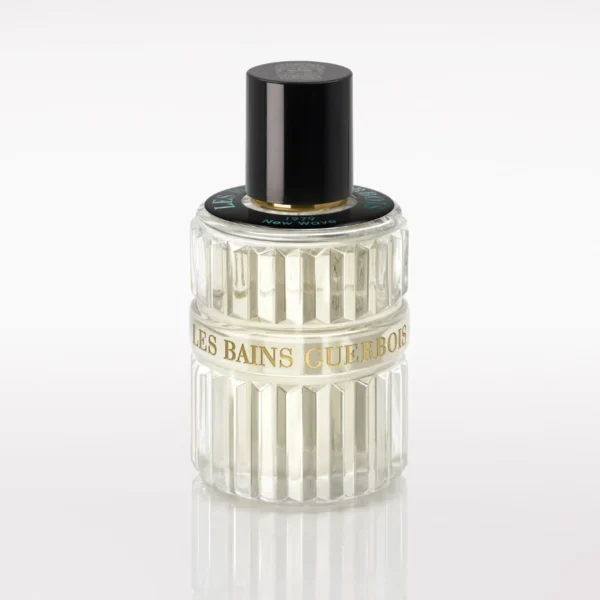
Let us take an example from the house. 1979 New Wave, an eau de parfum composed by Dominique Ropion, opens on spearmint, peppermint and aldehydes. At the heart, orris concrete and Virginia cedar. In the base, Australian sandalwood, an ambery wood and musk. This is the pyramid as we present it: a way of telling the story of the perfume, not its formula.
On paper, everything seems to say “summer”: the mint, the brightness, the feeling of freshness. Worn in winter, it does something else. The mint and aldehydes are not trying to keep you warm. They cut through the cold air. The iris brings a more powdery, denser texture, and the woody base gives it grounding without weighing it down.
1979 New Wave does not warm up winter. It makes it electric.
That is what we can expect from a perfume: not that it matches the thermometer, but that it gives the day a tension, a certain style.
AND THE OTHER WAY ROUND: WHY NOT AN OUD IN SUMMER?
The reasoning also works in the other direction. Oud has a reputation as a winter material: dark, dense, enveloping. Yet you only need to smell how it is handled to understand that everything depends on the writing.
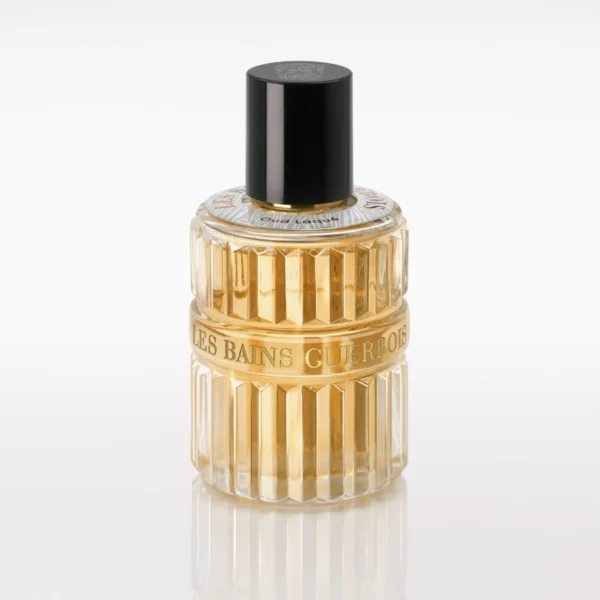
Oud Laqué, composed by Mathieu Nardin, opens on raspberry, cardamom and saffron. At the heart, rose, Bourbon geranium and guaiac wood. In the base, oud, Siam benzoin and patchouli. The fruit and spices bring light at the start, the rose and geranium give it contour, and the oud follows, from deep within.
We will not say that Oud Laqué is a summer perfume. We say that it does not need winter. We love wearing Oud Laqué on summer evenings, when the heat eases, when we eat outside and the night stretches on. A so-called warm material does not need the cold to exist.
When it is very hot, we simply tend to use a lighter hand with rich compositions. It is not a ban. It is a question of context and dosage.
WHAT CARRIES ACROSS THE SEASONS MAY ABOVE ALL BE BALANCE
Why do some perfumes move from one season to the next effortlessly, while others seem made for a single climate? Our hypothesis comes down to one word: balance.
It is not about having a top, a heart and a base neatly in order. The olfactory pyramid tells the story of a perfume; it reveals neither its formula nor its quality.
What interests us more is the way a composition creates tension, room to breathe, contrasts and several levels of reading. In this kind of construction, context can bring out different facets without reducing the perfume to a single sensation.
A balanced perfume can change its face with the seasons instead of simply turning up the volume.
By contrast, a perfume designed above all for power often has only one answer to everything: louder. That is where the season really becomes a problem.
SOMETIMES THE PROBLEM IS NOT THE SEASON. IT IS THE VOLUME.
What we know. Ambery woods are not the enemy. They are perfumery ingredients capable of giving a composition grounding and longevity. Their manufacturers make no secret of their power: Givaudan describes Ambrofix as a highly powerful and highly substantive material, and points out that it can easily be overdosed. The same house presents Ambermax as, in its own words, the most powerful and efficient dry ambery note ever created.
Our view. The problem is not the material. 1979 New Wave itself contains an ambery wood in its base, and we have nothing against it. The problem is when power becomes a perfume’s only language. When the formula is designed to be smelled several metres away, all day long, whatever the context.
Now add intense heat. For some molecules, temperature can speed up evaporation. In practice, a composition that is already very diffusive can then become more invasive. On a crowded underground train in July, in a lift, on a packed terrace, it no longer fills the space: it saturates it.
Please, now and then, avoid perfumes turbocharged with ambery woods when it is 35 °C. The heat already does a very good job of spreading them.
Is it really that bothersome? Often, no. It is a matter of dose, place, skin.
Sometimes, yes.
It stinks.
SO HOW DO YOU CHOOSE YOUR PERFUME?
Not with a “winter special” list. Rather with three questions, in the morning, in front of the shelf.
How do I want to feel today?
How do I want to come across?
What do I want to assert?
The weather comes afterwards, as a practical detail. It is 35 °C: we often use a lighter hand. Above all, we think about places: a shared office, a dinner, a train. And we look at the outfit, because a perfume can extend a silhouette or contradict it, and both are interesting.
These questions guarantee nothing. They simply put the choice back where it belongs: with you, not in the calendar.
SO, DOES A PERFUME REALLY HAVE A SEASON?
Its behaviour can change with the seasons. Temperature can alter the evaporation rate of certain molecules; on the skin, air movement and the properties of the composition also play a part. The measurements show it, and it would be absurd to ignore it.
But physical behaviour is not an olfactory identity. A fresh perfume in winter can be the most fitting choice of the day. An oud on a summer evening can be exactly what was needed. What matters is the balance of the composition, the dose, the place, and the desire of the person wearing it.
The season is a context. Not a prescription.